.png?width=100&height=100&name=Serengeti%20Gold%20online%20Logo%20(1).png)

Gold Import And Export License In India
Documents For Import Export Business In India
Global Demand for Gold by Region


Discover how governments secure national gold reserves, the role of banks and security firms, and best practices for gold transport and safety.
👉 Need advice? ☎️ Contact Us or 📱 Chat on WhatsApp
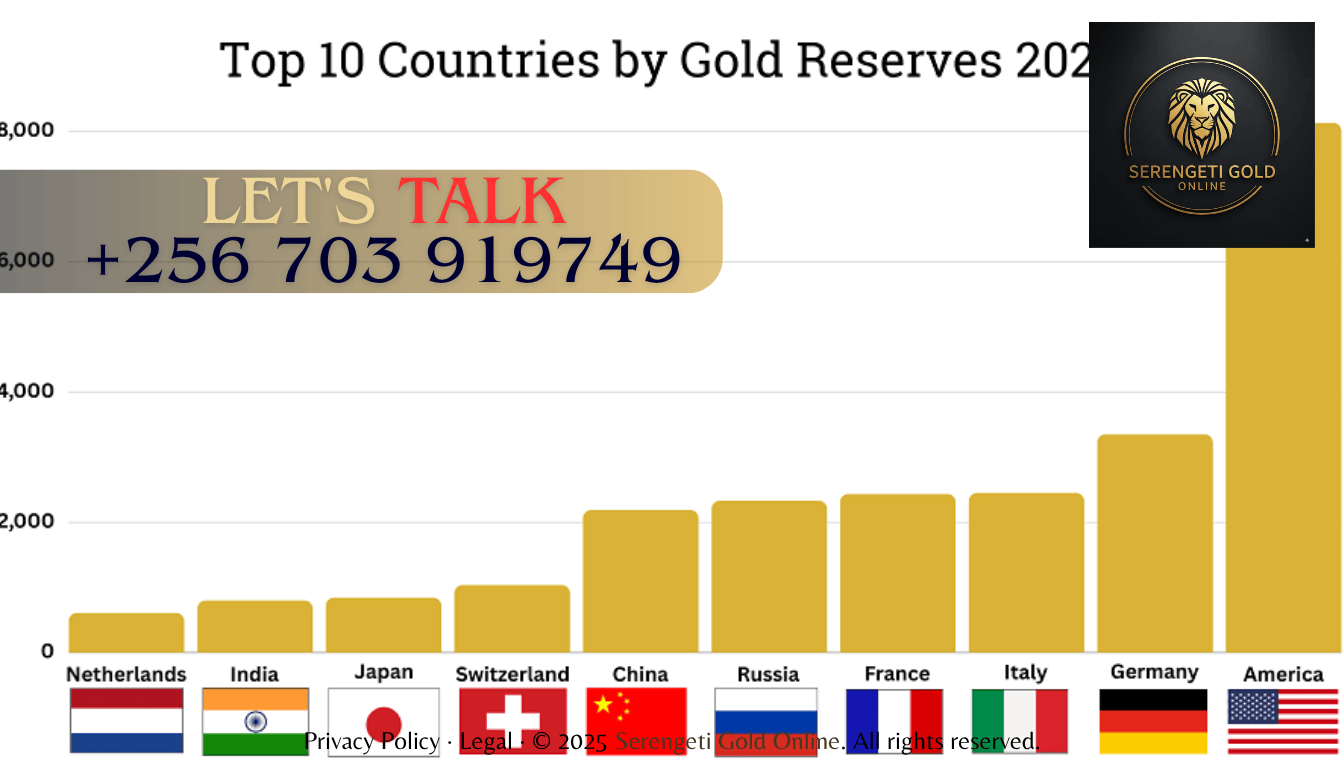
This article is part of our complete guide to Gold Safety & Security. Explore the full series for everything from private vaults to how security firms operate in the gold trade. For a look at reserve holdings by country, see our guide to Global Gold Reserves by Country.
National gold reserves represent some of the most heavily protected physical assets in the world. Beyond questions of how much gold a country holds, the more operationally critical question is how that gold is actually kept secure — physically, procedurally, and against an enormous range of potential threats.
National reserve vaults typically employ security layers well beyond standard commercial vault protection, building on the same core principles covered in our article on gold vaults around the world:
Physical security is only part of the picture. Governments also rely on:
National reserves are also protected through broader systemic measures — diversification across locations, careful management of public information about specific holdings and locations, and coordination with international security and intelligence networks to monitor emerging threats.
The security standards developed for protecting national reserves have shaped best practices across the broader gold industry — influencing how private vaults, refineries, and even large commercial holdings approach physical and procedural security. Understanding this gold standard (quite literally) provides a useful benchmark for evaluating security anywhere else in the gold trade.
At Serengeti Gold Online, while we operate at a very different scale than a national reserve, we draw on the same core principles — documented custody, layered security, and rigorous verification — in how we handle and safeguard gold throughout our own supply chain.
Continue exploring the series: see how these standards compare to private vault security in Gold Vaults Around the World, or the specialized firms that help implement security at this scale in The Role of Security Firms in Gold Trade. Return to the Gold Safety & Security hub for the complete guide.
👉 Want to understand the security standards behind your gold purchase?☎️ Contact Us or 📱 Chat on WhatsApp
