.png?width=100&height=100&name=Serengeti%20Gold%20online%20Logo%20(1).png)
Modern Gold Mining Methods
Gold Mining & the Environmental Impact
Future of Gold Mining Technologies


%20and%20scales%20used%20for%20measuring%20gold%20dust%20during%20ancient%20trade.%20(3).png?width=768&height=768&name=Historical%20brass%20gold%20weights%20(abrammuo)%20and%20scales%20used%20for%20measuring%20gold%20dust%20during%20ancient%20trade.%20(3).png)
Discover the water-intensive nature of gold mining, its environmental impact, and the importance of responsible water management for sustainable practices.
👉 Explore our summerised guide: Gold Mining & Extraction
👉 Need advice? ☎️ Contact Us or 📱 Chat on WhatsApp
This article is part of our complete guide to Gold Mining & Extraction. Explore the full series for everything from processing methods to environmental challenges in mining.
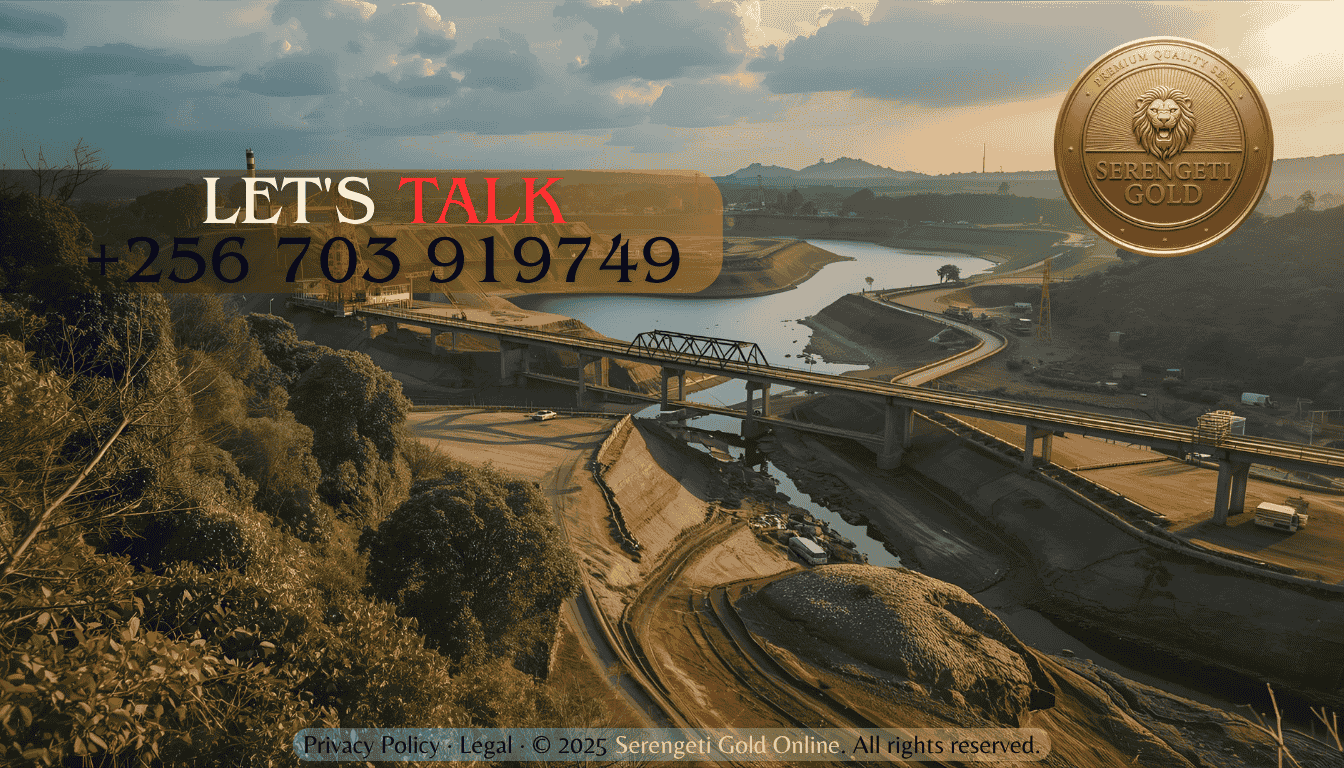
Gold mining is a water-intensive process, from initial ore processing to dust suppression and equipment cooling. In regions where water is already a scarce or contested resource, mining's water demands can create real tension with local communities and agriculture — making responsible water management a defining issue for the industry.
In many mining regions, water sources also serve nearby agricultural land and communities. Large-scale water withdrawal for mining operations can lower water tables, reduce river flow, or compete directly with irrigation and drinking water needs — a tension that becomes especially acute during dry seasons or in already water-stressed regions.
Beyond consumption, mining poses contamination risks to water sources:
Leading operators reduce their water footprint and contamination risk through:
Water stewardship is one of the clearest indicators of how seriously a mining operation takes its environmental and community responsibilities. It's a less visible issue than gold purity, but arguably just as important to understand when evaluating where gold comes from and how it was produced.
At Serengeti Gold Online, we prioritize sourcing partnerships with operations that manage water responsibly, recognizing that sustainable extraction depends on protecting the resources local communities also rely on.
Continue exploring the series: see the broader picture in Environmental Challenges in Mining, or the processing methods that drive water use in Cyanide vs. Mercury in Gold Processing. Return to the Gold Mining & Extraction hub for the complete guide.
👉 Curious about the environmental standards behind our sourcing? Contact Us or Chat on WhatsApp.
.png?width=1344&height=768&name=Large%20open-pit%20gold%20mine%20with%20heavy%20machinery%20and%20processing%20plants%20(1).png)